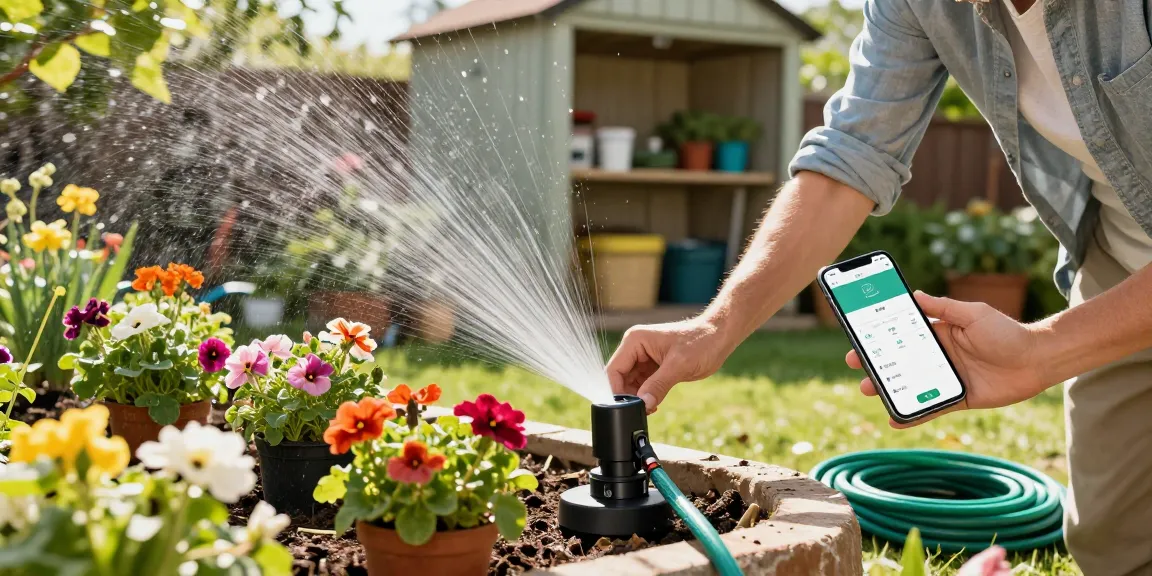
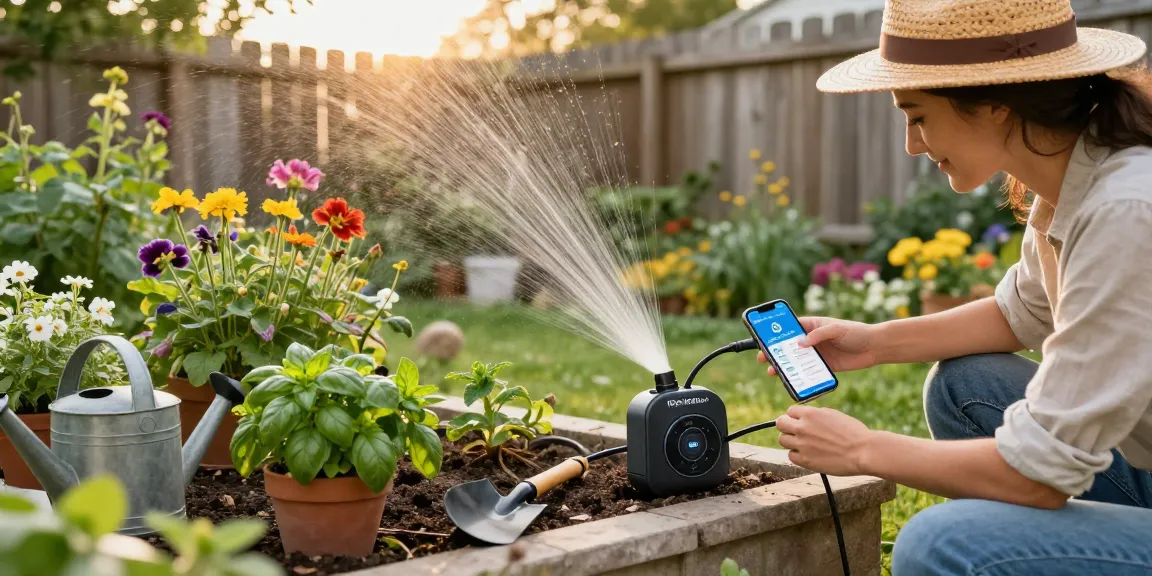
When Maria noticed brown patches creeping into her once-lush front lawn, she blamed the summer heat. Her neighbor Mark, who gardens tomatoes and peppers in raised beds, watched his seedlings flop despite daily sprinkler runs. Both homeowners were making the same mistakes: using the wrong system for the task and not matching timing or placement to plant needs. This article walks through those mistakes and pairs each one with the right setup—so you can upgrade to a water-saving lawn with RainPoint and actually see results.
1. Mistake: Treating All Areas the Same — using sprinklers everywhere
Problem: Many people run a single sprinkler schedule for the whole yard. Lawns, flower beds, vegetable rows, and potted plants have different root depths and moisture needs. That one-size-fits-all approach leads to overwatering some zones and underwatering others. For example, the turf at Maria’s front lawn needed deep, infrequent soakings; her ornamental beds needed shorter, more frequent waterings.
Solution: Match the system to the zone
Fix: Segment your landscape into distinct zones and choose the right hardware for each. For large, contiguous turf, an in-ground sprinkler system (preferably with a smart controller) gives even coverage for shallow-rooted grass. For flower beds and vegetables, use drip irrigation or soaker hoses to target root zones directly. Potted plants benefit from slow-release self-watering stakes or small drip lines. A WiFi timer such as the RainPoint model lets you run multiple, tailored schedules so each zone gets the right runtime without manual switching.
Concrete example: Convert a 2,500 sq ft lawn to an in-ground zone that runs twice weekly at 25 minutes per zone in early morning; switch raised vegetable beds to drip emitters that run for 30 minutes three times a week. That targeted approach often cuts overall water use by 20–40% compared with a single sprinkler schedule (EPA WaterSense reports smart irrigation controllers can significantly reduce wasted outdoor water; see epa.gov for details).upgrade to a water-saving lawn with RainPoint
2. Mistake: Overwatering by Time, Not Soil Moisture
Problem: Homeowners frequently program sprinklers by clock time—"15 minutes every morning"—without checking whether the soil actually needs water. Mark, the tomato grower, watered daily because he thought frequent light watering helped seedlings; instead, his roots stayed shallow and plants suffered in heat.
Solution: Use soil-based triggers and deep soak cycles
Fix: Aim for soil moisture targets, not fixed clock routines. Install a soil moisture sensor or use a smart controller that adjusts schedules based on weather and evapotranspiration (ET). If you don’t have sensors, perform a simple screwdriver test—push an 8-inch screwdriver into the soil after irrigation; it should penetrate easily to the root zone. If not, shorten cycles or increase frequency and adjust until water penetrates 6–8 inches for lawns and 10–12 inches for deep-rooted perennials and shrubs.
Concrete example: Swap daily 10-minute sprinklings for a schedule that gives the lawn one deep watering every third day in summer; use drip lines set for 30–45 minutes twice weekly for vegetables. A smart controller can reduce irrigation time by about 20% while keeping plants healthy, according to extension research from several land-grant universities.
3. Mistake: Leaky or Poorly-Directed Emitters — uneven delivery
Problem: Leaks, clogged sprinkler heads, and misplaced drip emitters are silent water-wasters. A single broken rotor or an emitter pointed into mulch instead of soil can dump gallons daily. Maria noticed soggy areas directly under a sprinkler and dry patches a few feet away; rotors were misaligned and pressure was inconsistent.
Solution: Inspect, clean, and adjust—then optimize layout
Fix: Walk your system monthly. Look for pooling, check emitter outputs, clean filters on drip kits, replace faulty heads, and adjust spray patterns. For drip systems, use pressure regulators and inline filters to prevent clogs. Where runoff occurs on slopes, switch to shorter, repeated cycles (cycle-and-soak) to allow infiltration. Consider grouped emitters for clustered plantings—three 1 GPH (gallon-per-hour) emitters spaced around a shrub usually outperforms a single high-flow emitter.
Concrete example: Fixing a misaligned rotor that lost 3 GPM might save ~4,320 gallons per month if it ran for 24 hours—obviously, sprinklers don’t run nonstop, but even modest hourly losses add up. Inspecting and adjusting heads at the start of season prevents that waste.
4. Mistake: Choosing Sprinklers for Vegetables or Tight Beds
Problem: Sprinklers soak foliage and create humid conditions that encourage disease in vegetables and annuals. Mark’s tomato leaves developed early blight after weeks of overhead watering. Sprinklers also waste water through evaporation and wind drift, especially during midday.
Solution: Install drip irrigation tailored to edibles and beds
Fix: Drip irrigation places water at the root zone where plants need it, reducing evaporation by up to 70–90% compared to overhead systems in many cases. Use inline drip tubing for rows and spot emitters for single plants. For raised beds, a simple 1/4" drip layout with 12" emitter spacing and 0.5–1 GPH emitters gives precise control. Pair the drip with a programmable timer so vegetable beds water in cooler hours, reducing disease risk.
Concrete example: A 20-ft raised bed with 1/4" tubing and emitters every 12 inches running 30 minutes twice weekly uses far less water than a 30-minute sprinkler run—test results from extension services show water savings of 30–60% with drip irrigation for edibles.
5. Mistake: Not Automating or Monitoring—assuming "set and forget"
Problem: Many homeowners install irrigation hardware and never revisit settings. Seasons change, rainfall patterns vary, and controller programs that were correct in May are wasteful by August. Maria kept the same schedule year-round and lost tidy savings she could've had.
Solution: Use smart timers and seasonal adjustments
Fix: Automate with a smart timer that uses local weather data or soil sensor input to adjust runtimes. If you prefer manual control, create a simple monthly checklist: reduce runtimes after heavy rain, increase for heat waves, and cut back in cooler months. A WiFi timer from RainPoint can handle that schedule automatically, syncing changes to local weather and letting you override remotely when a heat spell arrives or a storm is forecasted.
Simple table: Suggested baseline schedules (adjust by soil and climate)
ZoneTypical RuntimeFrequencyCool-season turf (sandy soil)20–25 min/zone2–3× weeklyWarm-season turf (loam)25–30 min/zone1–2× weeklyVegetable beds (drip)30–45 min2–3× weeklyFlower beds & shrubs (drip/soaker)20–40 min1–3× weekly
Concrete example: Using a smart controller reduced a neighbor’s watering by 15% in one season by cutting a wasted mid-July cycle after a week of rain—EPA WaterSense notes that smart controllers can reduce outdoor water use substantially (see epa.gov/watersense for program details, rel="dofollow").
- Tip: Run irrigation in early morning (before 9 a.m.) to reduce evaporation and disease risk.
- Tip: Group plants by water needs—don’t mix thirsty annuals with drought-tolerant shrubs on one line.
- Tip: Consider pressure-compensating emitters on long runs to guarantee even output.